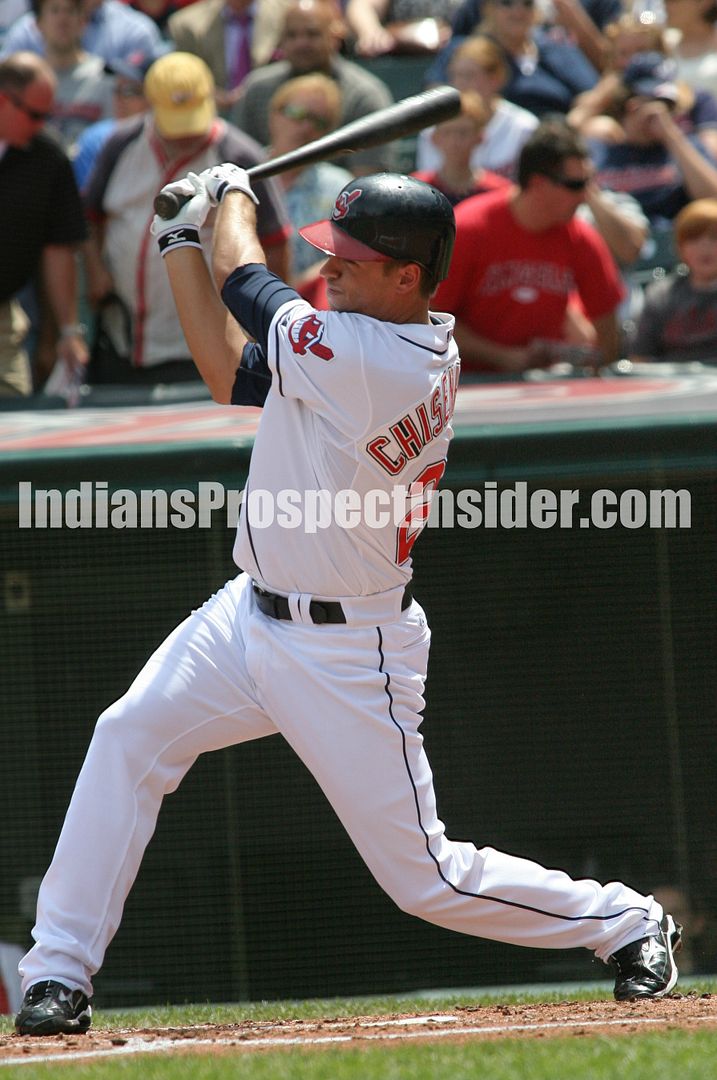
, , , ,

All-Aught Indians--Back-up Infielder--John McDonald

[ Monday, February 8, 2010 | 0 comments ]

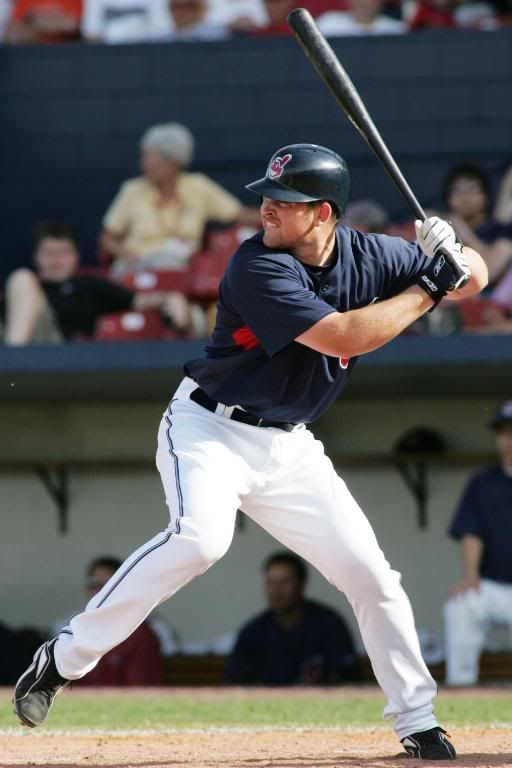
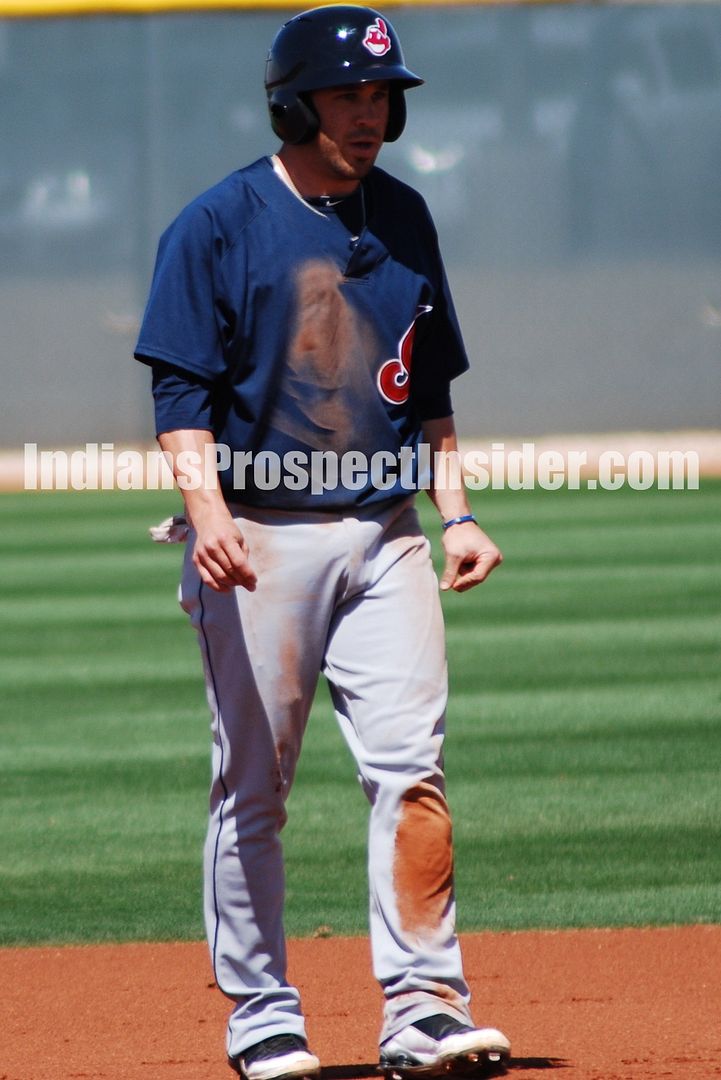
Cleveland Indians vs Chicago Cubs
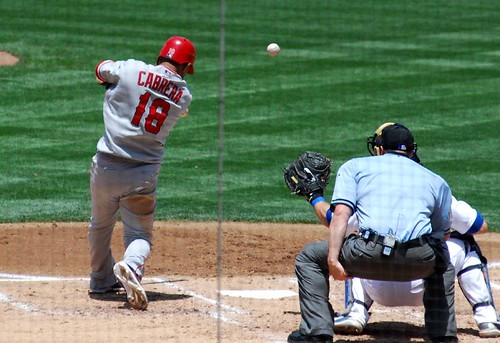
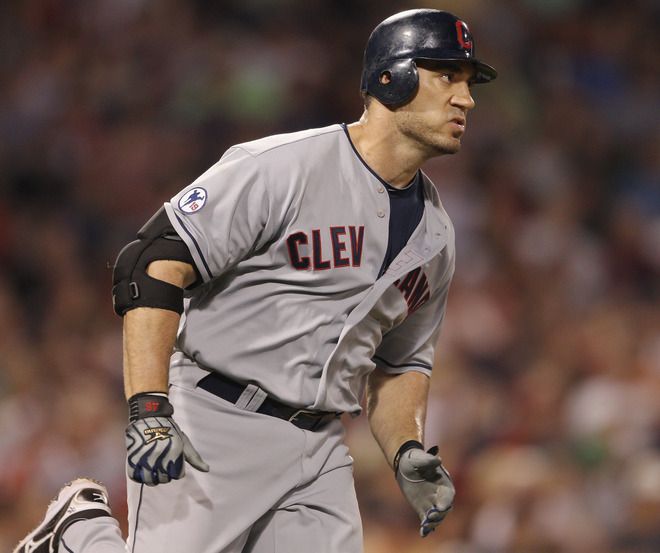
Is there a more unsung job in baseball than the utility infielder? These are the guys that are signed to a contract because they can play tough defense, and do it at more than one position. Can they hit? Not likely. If you find a back-up infielder that has a stick, nine times out of ten, they end up starting. The Indians have had two clear back-up infielders over the past ten years that were in the running for this position. Some may say three, but Asdrubal Cabrera was brought up as a starter at second base, so he's excluded. Instead, the energy focuses on the guy who opened the decade at the position, and the guy who closed it out. John McDonald really put a stamp as the utility infielder from the Tribe from 2000-2004, while Jamey Carroll took over the role in 2008 and 2009. Both were fantastic infielders, but where they differed in two key areas. Carroll had far superior offense, and also had more opportunity to play. McDonald played 2nd, 3rd and short, while Carroll only played 2nd and 3b, while spending some time in the outfield. We'll get to Carroll at a later date. The All-Aught Indians back-up infielder is Jamey Carroll.

McDonald really had become the poster of what the Indians hunt for every year in a utility infielder. The issue with McDonald really turned out to be his durability. From 2000-2001, and then again in 2003, an injury would keep McDonald from performing at the top of his game, and ultimately, cost him this slot.

Carroll really was subtle excellence at the position. Carroll played both second and third for the Tribe, and could be the Indians Super-Utility player, since he played the corner outfield positions as well. Still, his excellent defense at all infield positions, plus his offense made him stand above McDonald.

Carroll immediately played dividends for the Indians when they signed him to a deal in 2008. Asdrubal Cabrera had started with the Indians in 2007, but would start the season with the Tribe for the first time in 2008. He struggled, and Carroll stepped in and started when the Indians would send Cabrera to Buffalo for much of June and July. He would make 66 starts at second for on the season. He would also make 18 starts at third base. Overall, his fielding percentage was .970+, and .990 at second base. Offensively, Carroll would smoke the ball after May, rolling out a .298 average. He would have a four-hit game, and end the season with a nine-game hit streak. He would end the season with a .277 average, and seven stolen bases. More than solid numbers for a utility guy.

Carroll had a similar story in 2009, just without as much opportunity. He would hit .276 in a few less at bats. His OBP was .355 for the second season in a row, and in a sorry season, was one of the few who consistently performed.

Carroll is never going to be THE guy in any line-up. What he is though, is the heartbeat of a team. Here's a guy who probably doesn't have many more tools as a ballplayer as you or I, but obviously works hard to be where he is. He's the epitome of what a utility player is. He's the glue that holds together a team. Unfortunately for the Tribe, there was more glue than team.

Carroll capped off his career with the Indians by winning the Frank Gibbons/Steve Olin Good Guy Award winner.

Like many Indians before him, Carroll's performance with the Tribe in the Aughts would ultimately price himself out of the Tribe's range. Carroll would ultimately sign on with the Dodgers as their utility guy, but not before we send Carroll off with his reward as the all-aught utility infielder for the Indians.

, , , , , ,

The Sunday Drive in blogville and the land of free agents

[ Sunday, February 7, 2010 | 0 comments ]

MLB: White Sox v Rangers August 30, 2007
It's time to thank the blogs that have been really carrying the Cleveland Indians banner for the past several years. It's not mystery that many of the beat writers for the Indians' major newspaper coverage are utter and absolute garbage, so without sites such as Paul Cousineau's The Diatribe, Tony Lastoria's Indians Prospect Insider, Nino Colla's The Tribe Daily, Let's Go Tribe, Rich Swerbinsky's Swerbs Blurbs (TheClevelandFan.com for all you newbies) , Rick Grayshock and the crew at WFNY, Anthony Castrovince's Castro Notes (I know, he cheats because he works for the Indians, but he's a damn fine writer, and cuts to the chase, which I love) and Paul Cassano's Weblog. These are my daily reads, and where I get the best information on the web, bar none. The writing is not only good, but has heart. It's amazing what you can do when you actually love the team and the sport that you cover. Okay, enough with the Kum Ba Yah, onto our Super Sunday edition of a little slice of love...yeah...I just threw up a bit in my mouth as well.

The Indians, of course, have been searching for some free agent help on the cheap, and we're getting to that time of the hot stove season when the last table is left at the flea market. Even though the Tribe was willing to dish out $5 million to Orlando Hudson, don't expect the Indians to throw out that kind of deal to anyone else. I'll get to that in a second. The Indians are likely looking for a right-handed bat to their line-up, and perhaps a veteran starter that could log some innings to allow some of the younger pitchers some time to develop a bit more.

Who might the Indians sign?

Terry Pluto took notice of Jermaine Dye, a free agent that might fit the bill for the Indians. Dye smoked the ball prior to the All-Star break, then turned into a pumpkin afterwards. He ended with a line of .250/.340/.453, with 27 homers, 81 RBI and 78 runs scored for the Chicago White Sox. His first half line was a more than solid .302/.375/.567, with 20 homers and 55 RBI, while his second half was .179/.293/.297, with 7 homers and 23 RBI. The 35-year-old outfielder went through the biggest slump of his career, with no real answers.
"I have no clue," Dye said. "I put in the work and sometimes it doesn't work out. There's nothing wrong with the mechanics. When you struggle, the pitches you should hit you foul off. The pitches you take normally when you feel good they're balls, they're strikes now. When you struggle everything goes wrong. This second half it just didn't happen."
Dye wasn't injured, so it's unsure if it was simply season-long fatigue, the fact that he's now 35, or just a fluke.

What we know about Dye is that he's been a solid performer for the White Sox over the past five seasons, and that he turned down a $3.3 million deal with the Chicago Cubs. Dye can play right, left and first base, as well as DH, so he could be a solid stop-gap for the Tribe if he can perform as he did the first half of the year last season. Foxsport.com's John Paul Morosi reported today that Dye is focusing his attention on the AL to maximize his playing time, so the Tribe will likely be in play. The only question left is what kind of money is on the table. It will likely be much less than the $3.3 million he was initially offered. We shall see.

Past Jermaine Dye, there really aren't many other options that would be worth taking a slot away from a young guy trying to win a job. Pluto mentioned Jonny Gomes, and there are guys out there like Rocco Baldelli, but the problem with any of these sells is that it's hard to make a case for a question mark, when you have plenty of question marks that can already fill the role.

With that said, there is one player that intrigues me a bit, if not for his offense or defense, then for what he could bring to the team.

That player is Nomar Garciaparra. The rumor bill is buzzing that Nomar is thinking about retiring, but former Tribe-hand and good friend to Nomah, Lou Merloni, says that he has one more season left in the tank. I'm not really sure what's true with regards to the former all-star shortstop, but he would be a valuable commodity, if only for a short time.

Nomar isn't the player he once was, not even close. He went from what was on pace for a hall-of-fame career to a back-up infielder. A bum calf has hindered his career over the past few years, and a once-sure-fire hall of fame career is now in jeopardy. Nomah is a clubhouse presence for sure, and if he's healthier than in past years, he could bring a decent stick in a back-up role. The bonus is that he'll likely sign for a minor league deal, if he decides to play, and he can play most of the infield positions, as well as the corner oufield slots.

You can't forget about Johnny Damon, who's still likely looking for something north of $5 million.

There are starters still available, but all are a mixed bag. There's the old tribe hand, Bartolo Colon, who's a free agent, but would likely sign a cheap deal. There's John Smoltz, who bombed with Boston, but did fare well with the Cardinals. There's Pedro Martinez, who may just be holding out for more money. There's a guy like Noah Lowry, who hasn't played in two years. Braden Looper is still out there, and may be had for less than the $1.5 million that Erik Bedard received from the Mariners. There could be a typical Tribe reclamation project in the bag, but the Indians haven't bitten yet.

The Indians are likely waiting out spring training. Knowing past history, they'll be looking to sign some players to long-term deals, but I'll get into that in the next couple of days. There could be some names that don't make the big league club, and refuse assignment. Shapiro may play the waiting game, and get someone either through a trade or free agency to help out closer to April.

It's fairly evident that free agency isn't a priority this season, and it shouldn't be, should it?

, , , , ,

Do the Indians value Luis Valbuena?

[ Saturday, February 6, 2010 | 0 comments ]

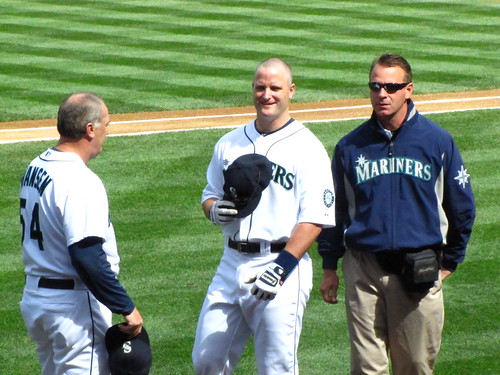
Cleveland Indians vs. Mariners in Seattle.
When the Cleveland Indians acquired Luis Valbuena from Seattle in December of 2008, it was believed that the front office had answered the call to acquire middle-infield talent for the near-future. Valbuena brought from the Mariners a nice bat, an improving defense, a strong work ethic and a friendship with Asdrubal Cabrera. So, when Valbuena backed all of that up with a solid initial season with the Tribe...

...why did Mark Shapiro try and make their one free agent splash for Orlando Hudson, a second baseman?

There certainly wasn't much indication last season that the Venezuelen 22-year old wasn't on a path to becoming the every day starer. Valbuena began his tenure with the Tribe with a huge month of April in Columbus (.321/.436/.537), a May call-up, and a solid year in Cleveland, playing both second base and shortstop. The season wasn't without it's bumps. You can't mention Valbuena without hearing about his struggles against left-handed pitching. He only batted .205 against lefties, and worked mostly out of a platoon with Jamey Carroll. Valbuena would only bat .195 in 37 games in May and June, with four home runs and 10 RBI. It's easy to just look at the numbers and say that Valbuena stunk it up in his first two months, but it's a bit more complicated than that.

Valbuena was really getting his first long-term opportunity in the majors. Sure, he had a cup of coffee with the Mariners in 2008, but we're talking about 18 games and 49 at bats. There was bound to be a bit of struggle out of the gate. Combine that with the fact that Valbuena ended up having to play shortstop for essentially the entire month of June, and the struggles begin to make more sense.

Valbuena had played a grand total of 17 games at shortstop in his three-year professional career. You don't have to be a rocket scientist to figure out what happens when you plug in a rookie who was already struggling into a position they have rarely played, only one month into their tenure as a big leaguer.

Valbuena would return to second base on July 1st, and would showcase much improved play at the plate and in the field over the last three months. He would bat .281, with six homers and 21 RBI. Cabrera and Valbuena, both from Venezuela, and long-time friends, became a spectacular double-play combination. No, we aren't talking about Roberto Alomar and Omar Vizquel just yet, but there were similarities. Vizquel and Alomar were long-time friends, having played several years together in the winter leagues. Cabrera and Valbuena were also partners-in-crime prior to their tenure with the Indians, both in Winter Ball and with the Mariners.

Does Valbuena have holes in his game? He's 23, and has yet to play a full-season, so sure, he has holes in his game. Should the Indians be ready to give his slot to Orlando Hudson? The quick answer should be no, not when you are rebuilding, not likely to contend in 2010, and not willing to spend much money on much of anything.

So, why has the rumor-mill been grindin'? If you are to believe it, the Cleveland Indians offered Orlando Hudson a two-year, $10 million offer, with a player option for the third year. The deal was guaranteed, but supposedly back-loaded, so that much of the money would be paid in an option year buy-out. Try to wrap your head around that one. Hudson ultimately signed a one-year, $5 million deal with the Minnesota Twins, but the question remains, why would the Indians become players for a position it doesn't appear they need?

You'll have the spinsters close to the Indians saying that the rumors were false. I don't believe it. I'm not a huge Ken Rosenthal fan, but he generally will back off a story quickly if the story turns out to be false. In this case, Rosenthal has been pretty steadfast in stating that the Indians were after Hudson, and that they ultimately made an offer. The Indians WERE players for Cabrera, of that I'm convinced. Of course, Mark Shapiro again takes the CIA stand, and never tips his hat. I'm so sick of the over-importance on secrecy this regime takes. I'm not saying we need to know everything, but it really would be nice to hear some actual news, and not garbage straight out of Mark Shapiro-cliche 101.

So why go after a second baseman with Valbuena on the roster, and at 23, one of their bright prospects?

Were the Indians simply trying to sell making a move for more than $850,000, their previous high deal this offseason? It's possible. I could certainly see Mark Shapiro and his brain trust making a play for a player they wouldn't mind having, but offering up a "creative" deal that no player in their right mind would take. It's been a historic ploy by Tribe management over the years, and one they could be in play with right now. With Tribe fans generally unhappy with the Shapiro regime over the past two years, Shapiro might be making one of those offers that he can point to later and say, "we tried, they just didn't take the money." The contract is also a curiosity to me. How much was backloaded, and what was up with a third-year buyout? What did Shapiro do, make the first two years worth a million each, and how would the "buyout" work? The offer just sounds ridiculous. Think Jim Thome, when the Indians offered him a deal that was heavily back-loaded, and full of idiocy.

Or are the Indians questioning Valbuena's ability to ever be a full-time second baseman? That seems silly.

Whatever the reasons, the questions are out there. How will Valbuena take in all the talk of signing a guy to play his position? Time will surely tell, but hopefully he'll be out to prove the Tribe management that they were flat out wrong.

, , , ,

All-Aught Indians--Back-up Catcher--Kelly Shoppach (2006-2009)

[ Friday, February 5, 2010 | 0 comments ]

MLB: JUN 18 Phillies v Indians
When the Boston Red Sox came a-knockin' in an attempt to acquire Coco Crisp, Cleveland immediately asked for top prospect Andy Marte, who had been acquired earlier in the offseason from the Braves. The Red Sox quickly agreed, but the Indians began working the Sox for another important player. Guillermo Mota was thrown in to help bolster the Indians pen, but the player the Tribe wanted was another top prospect in the Sox organization that was buried behind Jason Varitek. Boston was hesitant to give up their top catching prospect, and they turned out to be dead right. The All-Aught Indians back-up catcher was that player, Kelly Shoppach.

It's really hard to look at Shoppach as a back-up since he was essentially the starting catcher for the Indians over the past two seasons. In 2008, he ascended to the top thanks to an injury that left Victor Martinez on the DL for much of the season. In 2009, Shoppach again filled in for VMart, after the starter was dealt to, ironically enough, Shoppach's old team, the Boston Red Sox.

Make no mistakes though, Kelly Shoppach was a back-up. This was always VMart's team right up until the trade. Once Martinez was traded, the writing was on the wall for Shoppach. Put up the numbers, or find yourself either traded, or non-tendered at the end of the season. We'll get to that in a bit.

Without a doubt, Kelly Shoppach, even with his 2009 struggles, was the top player in the Crisp deal. There's a lot to like about the former Tribe backstop. The bottom line with Shoppach, and I'm surprised that this was questioned over the past year or so, is that he is a top defensive catcher across the board. He stops everything, and still has a cannon for an arm. He's the guy that is covered in dirt, even when he plays on pavement. He also carries a big stick. By that, I mean that he swings for the fences. True, he's either a hit or miss, but when the streak-meter is on hit, he can hit rockets.

In 2006, Shoppach immediately became the Tribe's primary back-up. Unfortunately, Victor Martinez was in his way, but the Indians were planning on using VMart as a fill-in at first base to save his knees. Shoppach made that a possibility. Still, he was sent down to Buffalo in May because of inactivity, but was recalled in June, and would stay with the team for the remainder of the year. Shoppach would only commit two errors in his 41 games, and would throw out 10 of 29 baserunners to the tune of .35%.

He would continue his back-up duty in 2007, playing in 59 games. His offense would pick up slightly, hitting 7 homers (up from 3), and hitting .261, up from .245. He did stay with the big league club the entire season, and was the personal catcher for Paul Byrd, as he was behind the plate for all of his 31 starts. Shoppach would only make four errors, and would throw out 13 of 36 baserunners, to the tune of 36%. Shoppach was on fire in the playoffs, batting .500 in his two starts with Byrd on the hill.

The 2007 season was the highlight of his career thusfar, taking over for an injured Victor Martinez. He led American League catchers with 21 homers, and was third overall. Shoppach's brought back a little Boudreau of his own in July against the Tigers when he became the second player to have five extra-base hits in a single game. He went 5-6 that day, with three doubles and two home runs, becoming the only player since, you guessed it, Lou Boudreau in 1946, to complete the task. Shoppach became a commodity. With VMart slated to return in 2009 with two-years left on his contract, Shoppach became a part that a bunch of teams wanted.

Cleveland nearly spun Shoppach into a big-time deal with the Tribe. Tribe GM Mark Shapiro began talks with former Shapiro underling, and new Pirate GM Neal Huntington about potentially trading Cliff Lee, Franklin Gutierrez and Kelly Shoppach to the Pirates for Jason Bay and Ryan Doumit. The Pirates eventually said no to that deal, but it does show you what kind of ups that Shoppach had.

2009 wouldn't be a stellar year for Shoppach. In his 89 games, he would hit .214, with 12 homers and 40 RBI. That's really what you get with Shoppach, a streaky power hitter with impressive defense.

Shoppach was eventually traded after the season, a victim of the Indians cost-cutting. The dealt him at a sell-low, and acquired Mitch Talbot, a moderate prospect for the Rays. Of course, that's for the Tribe-teens in ten...hopefully.

For now, Shoppach was clearly the best back-up catcher in baseball over the past four seasons. In many ways, he's been the heart and soul of the team for long stretches of games in 2008 and 2009. That makes him the clear choice for Cleveland's back-up Catcher of the decade.

, , , , ,

Might the Indians steal Adam Kennedy?

[ Thursday, February 4, 2010 | 0 comments ]

Adam Kennedy follows the flight of his batted ball
Late last week, Orlando Hudson and MLB.com writer Bill Ladson threw out the Indians as a potential suitor for Hudson's services. As ridiculous as the rumors may be, they've gained footing over the past week as Hudson tries to hammer out as much money as possible from the Washington Nationals. With the focus on Hudson, might the Indians be targeting another second baseman that might come at a much cheaper price?

Susan Sussler, an A's staff writer for the San Francisco Chronicle, reported that Adam Kennedy might be looking to the Indians as a potential destination should Orlando Hudson sign with the Nationals:
Infielder Adam Kennedy said that he's still talking to Cleveland and Washinghton, but it seems as everything is on hold until Orlando Hudson decides where he's going.
Much like the Hudson rumor, Kennedy's name is coming out of left field. After spending most of his career in Anaheim as their starting 2nd baseman from 2000-2006, Kennedy spent two injury-riddled years in St. Louis, who released him. He had a resurgence last season after the Rays signed him to a minor league deal, then traded him to the A's in May. He would spend the rest of the season starting at both 2nd and 3rd for the A's after a season-ending injury to third baseman Eric Chavez and a 60-day DL stint for second baseman Mark Ellis.

He put up a solid line last season of .289/.348/.410, with 11 homers and 63 RBI, while stealing 20 bases, hitting 29 doubles and scoring 65 runs. Kennedy might be a fit for the Indians for a couple of reasons. First off, Kennedy has played all the infield positions, right and left field and DHed over the past three seasons. The Indians are looking for a utility infielder to take over for the departed Jamey Carroll. Kennedy's 2009 salary was also an Indians-friendly $400,000 last season. It's likely that Kennedy is looking for a hefty boost in his contract, but how big a boost is now in doubt. The irony is that should they focus on Kennedy, they'll likely be able to sign him for less money than Carroll's two-year deal with the Dodgers.

With Orlando Cabrera recently signing a one-year contract worth $3 million with the Reds, it's fairly obvious that there's not much money out there for middle infielders. Kennedy is likely waiting out Hudson so he can both set the price for the position, as well as give Kennedy some teams to focus on for a maximum deal.

Now before we go any further, let me state one thing about Kennedy: he's a lefty bat. Carroll gave the Indians a platoon for Luis Valbuena at second base. Kennedy would do no such thing. His career average against lefties is .249, and while better than Valbuena, it's not exactly worthwhile to put him in any sort of platoon. As I've stated before, I can't fathom that an infielder, starter or utility, is their priority right now, so Kennedy would be more in the Indians price range, but still out of the realm of sense. It's obvious that with players reporting in two to three weeks for most teams, Kennedy has to be getting nervous. Remember, he played his first 23 games last year in Durham, so he could be a cheap addition, should Shapiro want to add bodies. Perhaps Shapiro has put himself into the Hudson chronicles for this exact purpose, to focus others on the Indians that would be more affordable.

As far as Hudson goes, Anthony Castrovince discussed the likelihood of the Indians signing Hudson today at Indians.com. Castrovince, astute as always, thinks the chances of the Indians are slim and none:
On a team expected to field a youthful lineup and rotation with an eye on building toward more serious contention hopes in 2011, Valbuena fits right in. Hudson does not.
You could essentially plug Kennedy's name in there as well, if you are looking at him as a starter. I'm not. If you can get Kennedy in that Jamey Carroll role to fill in three or four days a week at any number of positions, so be it. Obviously, as a starter, it makes no sense. Obviously, as a platoon for Valbuena, it makes no sense. The same could be said for Hudson at this point, especially when you consider the team's other needs.

The B3 take on Kennedy is yes as another guy to throw into the utility mix. As anything else, it just doesn't make much sense.

Keep up with Tribe rumors, and whatever else sticks, here at B3...

, , , , ,

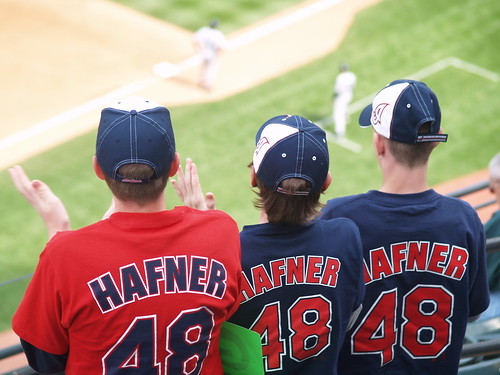
All-Aught Indians--DH--Travis Hafner (2003-2009)

[ Wednesday, February 3, 2010 | 0 comments ]

Cleveland Indians vs. Anaheim Angels
The DH slot wasn't as easy to pick as some might think. From 2001 through 2003, Ellis Burks was the Tribe DH, and he was very good at what he did. Burks had two fantastic seasons as the Indians batting specialist, knocking out 60 homers and driving in 165 runs, while batting .291. Burks would sprain his hand in spring training in 2003, and it would essentially end his tenure on the reservation. Ultimately, Burks couldn't swing the bat once the season started, and he ended up having season-ending surgery to repair nerve damage. The man who replaced him defined the position for the Indians during the decade. The All-Aught Indians DH is Travis Hafner.

Mark Shapiro made one of his best trades (and most underrated) of his tenure as Tribe GM when he dealt light-hitting catcher Einar Diaz and Ryan Drese to the first-base rich Texas Rangers for Travis Hafner and Aaron Myette. Diaz, Myette and Drese would all meander around the league for a few years, while Hafner would explode once he was given the DH job full time, and Victor Martinez would take over the hole created by Diaz' departure.

Hafner had lit up the Pacific Coast League in 2002, batting .342 with 21 homers and 77 RBI, and most scouts figured that he was still on the upside of his offensive potential if he could ever get the shot. With Jim Thome and Ellis Burks gone, the opportunity was there, and he hit the ground running.

In 2003, Hafner would break his toe and go on the DL after slumping early in the season. Hafner would hit 14 homers in just over half a season. No, it wasn't mindblowing numbers to be sure, but it did give a glimpse of what was to come in the future. His high note that season was hitting for the cycle in August, to become the first player since Andre Thornton in 1978 to accomplish that feat. There was still some rumbling about Hafner being a bust. It was increasingly apparent that he couldn't field, and with DH his only position, there needed to be the power production that should go with it. There was even talk that Broussard was the better player, and that Hafner may find himself as a bit player if he couldn't improve the offense enough to claim the DH-spot full time. Fortunately for Tribe fans and management alike, Hafner left all doubters in the dust in 2004.

Hafner would enter the MVP discussion by finishing 24th in the voting in 2004, and in doing so, would turn into the Indians Paul Bunyan. Out of spring training came two nicknames, "The Project" and "The Donkey," and Bill Selby would affectionately mash them together into Pronk.No, it didn't make any sense at all, but somehow fit. Pronk would roll out a line of .311/.410/.583, while hitting 28 homers and driving in 109 runs. The irony is that Hafner would only hit seven homers at the Jake, and he finished second in the league with homers on the road. It's really hard to put Pronk's production that season into words. With the sluggers of the 90's all officially off the roster, Hafner filled a void much bigger than any numbers. He provided the Tribe faithful with the guy that could change a game with one swing of the bat.

Hafner needed surgery at the end of the season for bone spurs in his elbow, which really add to his lore. The fact that he played much of the second half of the season with elbow-pain really put his prodigious numbers into perspective. If he could get healthy, one could only wonder what kind of numbers he would put up.

Shapiro would follow the Indians philosophy and sign their new slugger to a long-term contract. He signed a three-year, $7 million deal with a club option for $4.75 million. In avoiding arbitration, the Indians locked up what would be one of the top hitters in baseball for what would turn out to be chump change.

In 2005, Hafner would finish fifth in the MVP voting. Hafner's line that year was .305/.408/.595, with 33 (32 as a DH, a club record) homers and 108 RBI. Hafner would be named player of the month in June, hitting .345 with 8 homers and 29 RBI in only 24 games. His highlight of the month came in late June against the Red Sox. In the first game of the series against the Sox, Hafner would go three for five with two doubles and a home run in a 7-0 shutout. He would follow that performance up with another three for five night with two doubles, a home run and six RBI. The homer was a grand slam in the ninth-inning off of Keith Foulke to win the game. He was on his way to a huge July when he was hit by a pitch and would go on the DL after hitting .480 with 4 homers and 12 RBI prior to the all-star break. In September, Pronk would continue his lore by slugging six homers in six straight games, one short of Jim Thome's record. He was named the Tribe Man of the Year for his massive season.

In 2006, Hafner may have been the best hitter in baseball. His line read .308/.439/.659. His slugging and his prodigious 1.097 OPS were tops in the league. 39 of Hafner's homers were from the DH position, breaking his own record, and 110 of his 117 RBI were also a Tribe record for the DH slot. Hafner's swing selection improved drastically, as he topped the 100 walk plateau for the first time in his career. He became only the second Indians with 40 homers, 100 walks, 100 runs and 100 RBI. Hafner would miss the final 29 games of the season after breaking his right hand on September 1. Like the season before, Hafner was hit by a pitch. Historically, September has been a strong month for Pronk, so we'll always be left to wonder what could have been, since he was second in HR, RBI, extra base hits and walks. There was speculation that Hafner was the favorite to win the MVP prior to the injury. Hafner would tie Don Mattingly's record of six grand slams in one season, hitting his last in an August month that would see him be named Player of the Month for the second time in his career, hitting .361 with 13 homers and 31 RBI in 28 games.

What happened after the 2006 season has been left up to much speculation, and I'm not going to deal too much into that. Whatever you think are the reasons, Pronk's offensive dropped off considerably after the 2006 season. His 2007 line was a still solid .266/.385/.451, with 24 homers and 100 RBI, but obviously it was a decline in production following two seasons that saw Pronk reach the elite of MLB. Many thought that Hafner's early-season struggles were based on contract talks that were going on to extend his contract that would essentially void his 2007 money, his 2008 player option year, and add two more seasons. The four year deal, signed before the all-star break, was worth $57 million, with a club option for 13 million. Hafner would go 0-21 at the end of July, and questions began to crop up about Hafner and his offensive production. To make matters worse, Hafner would bat .186 in the 2007 playoffs, with only two homers and four RBI. He would strike out 12 times in seven games against the Red Sox. Without Hafner, the Indians nearly won the series. Imagine what would have happened had he shown up. 2008 would speak volumes on his future.

Hafner would develop shoulder issues that would put him on the DL from the end of May until the beginning of September. Hafner was hitting a paltry .217 prior to the DL stint. He was worse coming back in September, finishing the season below the Mendoza line with a .197 average, with five homers and 24 RBI.

In 2007, things looked promising. Pronk, a historically slow starter began with a line of .270/.370/.540 in April. Unfortunately, in April, Pronk would make a return visit to Dr. James Andrews to have a look at the shoulder, and another visit to the 15-day DL. He would return on June 5th, and would improve on his April numbers with a new line of .300/.426/.660 between his return and July 3rd. It appeared as though the big lefty was back. Pronk would struggle from that point on. Why couldn't he hit after July? Was it fatigue from having a bum shoulder for over a year or more? Was it Pronk trying to earn his money with a sore shoulder? His final line was .272/.355/.470, with 16 homers and 49 RBI.

Can Hafner rebound to the elite player, the project he was from 2004-2006, or is he relegated to the Donkey he turned into from 2007-2009? Reports are that Hafner's shoulder is a non-issue so far this year. While I doubt that, if the Indians can manage his shoulder, he can be an above-average player, but that's for another article.

Hafner was certainly a major part of the hope that Indians fans had that this team could climb out of the rebuilding mode. He was the bat that would carry the Tribe when the rest of the youth was still trying to figure things out. Sometimes it's hard to do, but look past the past three years and you'll find three of the greatest seasons from a DH in Indians' history, and the reason why Hafner is the DH of the decade.

Congrats Pronk, and here's for you putting up a nomination for yourself for the All-Tribe Teens Team ten years from now.

The Two Thousand, Aught DH's: Richie Sexson, Jim Thome, Kenny Lofton, David Justice, Jacob Cruz, Alex Ramirez, Enrique Wilson, Travis Fryman, Russell Branyan, Manny Ramirez, David Segui, Bill Selby, Chan Perry, Wil Cordero, Ellis Burks, Marty Cordova, Juan Gonzalez, Dave Hollins, Eddie Taubensee, Matt Lawton, Earl Snyder, Brady Anderson, Ricky Gutierrez, Lee Stevens, Karim Garcia, Milton Bradley, Coco Crisp, Shane Spencer, Jody Gerut, Travis Hafner, Ryan Ludwick, Tim Laker, Alex Escobar, Victor Martinez, Josh Phelps, Ernie Young, Ron Belliard, Aaron Boone, Ryan Ludwick, Jason Dubois, Jeff Liefer, Jhonny Peralta, Kevin Kouzmanoff, Casey Blake, Jason Michaels, Grady Sizemore, Ryan Garko, Trot Nixon, David Dellucci, Michael Aubrey, Shin-Soo Choo, Ben Francisco, Andy Gonzalez, Kelly Shoppach, Mark DeRosa, Andy Marte

, ,

Orlando Hudson rumors persist

[ Tuesday, February 2, 2010 | 0 comments ]

MLB: Milwaukee Brewers at Los Angeles Dodgers
MLB.com's Bill Ladson really wants the world to believe that the Indians are going after Orlando Hudson. Ladson said that the Indians, Rockies and another AL team (not the Twins) were in play. Of course, utilizing quality journalism, he followed that post stating that Hudson "wants to sign with [the Nats] real bad." He then continued his idiocy with, "Orlando Hudson appears unwilling to play for the Nats at a discount, according to the source. We'll see."

The only downside to signing Hudson would be the roadblock it would put on Luis Valbuena's career as a starter. Still, Valbuena would then move into the utility role, and would solve one of several problems the Indians have entering the 2010 season. Still, if $3 million is what teams are talking about with regards, it would seem that the Indians would be out of the market. Still, that would be a relative bargain for a player who made the all-star team last season.

Ladson seems to be throwing out everything to see what sticks, so he's likely just an amplifier for Hudson, who's trying to build up some money. Still, it would make things at least a bit interesting, and would give fans some sort of mirage that the Indians might be trying to win.

Of course, you do have to ask, does Orlando Hudson pitch?

,

Herb Score passed over for Ford C. Frick Award

[ Monday, February 1, 2010 | 0 comments ]

Herb Score
The Ford C. Frick Award is an award bestowed annually by the National Baseball Hall of Fame in the United States to a broadcaster for "major contributions to baseball." Perhaps it's that last phrase that kept Herb Score from winning the award this year, over a year after his passing. I'm not saying it's a correct assessment mind you, but perhaps an assessment carried by the idiots that vote on this thing.

I'm likely not being all that fair here. Score was selected by the same idiots(baseball historians, former winners and fans) to be a finalist. Jon Miller won the award, and regardless of what people say about him, his is a fantastic announcer. But it does seem that for Score to win the award, he has to overcome an insurmountable mountain.

He was the announcer for the Cleveland Indians for 34 years.

How do you climb that barrier? For 31 years of his tenure, the Indians were a laughingstock. Sure, Haray Caray won the award as announcer for the Cubs, but the Cubs were lovable losers, and Caray benefited from national exposure from WGN's superstation that was broadcast all across the country. The Indians were just losers, and sometimes weren't broadcast in Cleveland.

I love baseball because of Herb Score. Let's be honest here, there wasn't much to love about the Indians in the 1970's. My formative years of baseball were sitting in my living room listening to Herb Score on 1100, WWWE. The teams were terrible, and even though we all had our favorite players, they weren't very good. Score made them sound like heros. No, he didn't live in the land of hyperbole, like Jon Miller did. Instead, Score was like your grandpa, speaking of baseball players as though he had watched them play since they were knee-high to a grasshopper.

I didn't know how good I had it, to be honest, listening to Herb Score and Joe Tait paint a picture every night. We all know about Score's mistakes on the air, but that just endeared him more to the fans that were listening. Mistakes were part of Indians lore, of course, and it just made Score seem like one of us...a mistake-prone group of fans that were destined to back a team that made more mistakes than most. The fact that Herb didn't make mistakes every night, or for that matter, fall asleep was a miracle in itself.

Herb Score was ours, there's nothing more simple than that. Sunny California had Vin Scully, the Yankees had Mel Allen, and the Tigers had Ernie Harwell. The Indians...we had Herb Score.

Score could have been a miserable sort. In 1955, he burst upon the baseball scene as Fernando Valenzuela and Dwight Gooden would over 25 years later. He would be the rookie of the year in 1955. He would win 20 games in 1956. He would get beaned by the Yankees Gil McDougald in 1957. Many say it was over that day, and they may be right, but Herb never believed it. Instead, he looks back to a game in 1958 in which he tore a tendon. His mechanics changed, and his career was essentially over.

Not for Herb though.

Many of us Indians fans would whine and complain about losing the next great pitcher, but Score never complained. Instead, he got another job, as an announcer, for the same team he played for, and never left until that team went to the World Series not once, but twice in his last three years.

No excuses.

Yeah, Herb Score was ours, and for that reason, he likely won't ever be theirs. I loved listening to Scully and his southern draw, but he wasn't as good as Herb. I loved listening to Allen on This Week in Baseball, but he wasn't as good as Herb. Perhaps that's the way it should be. The Indians, essentially a quagmire of a team, with an announcer much to good for what was performing in front of him.

He never announced for baseball's game of the week, as did Scully and Miller in their heydeys. He never announced for ESPN, as Miller would. He never gained a national audience, since the Indians were about as national as Near Bear. Instead, he announced for little old Cleveland...the hateable losers...the mistakes on the lake...and he was pretty darn good...and eventually...so were they.

You know Herb, Ford Frick award or not...

"It's a beautiful day for baseball!"

, , , , ,

Finding Fausto Carmona

[ Sunday, January 31, 2010 | 0 comments ]

The Cleveland Indians need an ace, a stopper, a guy that not only has wicked stuff, but is able to use it to win ballgames. No, I'm not talking about a default ace that struggles through six or seven innings, and at best can win you about 15 games, but more likely will lose you about 15 games. I'm also not talking about the guy who wins the the Indians King of the Mountain game between their brigade of #3 and #4 starters.

I'm talking about an actual ace.

We all know the irony after the Indians dealt away back-to-back Cy Young Award winners CC Sabathia and Cliff Lee, then watched them face off against each other in this past season's World Series. In the meantime, the Indians left themselves with a rag-tag group of starting pitchers for the 2010 season. Justin Masterson, Aaron Laffey, Jeremy Sowers, an injured Jake Westbrook, David Huff and a slew of unknowns will enter spring training hoping to grab a spot in this very unassuming rotation. The unknown commodity remains to be Fausto Carmona, who went from domination in 2007, to an abomination since.

Fausto Carmona is the one and only current member of the Cleveland Indians pitching staff who not only has the ability and stuff to be an ace, but has already done it. The catch-22 for Fausto is that he could just as easily lose 20 games, as he could win 20. The catch-22 for the Indians is that he could win 20 games this year and the Indians STILL could lose more than they win, but their chances of winning will improve exponentially if the big righty can find what he's lost over the past two seasons...which would be the strike zone.

In 2007, Carmona went 19-8 with a paltry 3.06 ERA in 215 innings. Carmona was electric, peppering the lower part of the strike zone with both his hard sinker and slider. He struck out 137 batters, while walking only 61. Most importantly, he trusted his viscous stuff, which was in question after he bounced around from Triple A Buffalo to Cleveland, from the bullpen to the spot starts. Carmona finished fourth in the 2007 Cy Young voting that season, and Torii Hunter was quoted as saying after facing the young righty, "I can't wait until we face normal pitchers. This guy's sinker is practically unhittable." He seemed on the precipice to become the American League's next dominant pitcher. He even signed a four-year, fifteen million dollar contract, that could turn into a seven-year deal with the three club options at the end that would push it to a potential $40+ million dollar windfall.

Then it all went away.

Over the next two seasons, Carmona turned into a pumpkin. He went 13-19 with a 5.89 ERA. Likely the most telling struggle was his control. Carmona had only 137 K's and 140 walks. He also struggled with injuries. Somewhere along the way, Carmona began trying to nip corners, instead of just throwing strikes. This perfectionist attitude, along with more batters willing to keep their bats on their shoulders forced Carmona to adjust. He adjusted alright, if you consider his mechanics problems, missing the strike zone, multiple injuries and being sent to triple A adjusting.

The struggles have led several to question why the Indians would sign Carmona to a long-term deal. It's the type of hindsight that makes me sick to my stomach, to be honest. Carmona signed the deal in April of 2008, right after his ace-like year. Remember, this was prior to Cliff Lee's big season, and directly after Lee didn't even make the postseason roster. This was also the final year of CC Sabathia's deal. Dealing Sabathia at that moment were shrouded in thoughts of going to the world series. Sabathia wanted too much money, and Cleveland likely would have to keep the big lefty for the duration of the season as they made a run for the playoffs. At the time, it looked like Carmona would be the only guy at the top of the rotation after the season.

The Indians had long followed the plans of John Hart, who believed that good business was to avoid arbitration at all cost, and sign your future talent to long term deals. Remember, it was Hart that signed several players to multi-year contracts starting in 1992 that led to the Indians near-decade of dominance. Sure, we all talk about the deals given to Albert Belle, Kenny Lofton, Jim Thome, Carlos Baerga and Paul Sorrento, but rare do we talk of the deals that season to Jack Armstrong, Scott Scudder, Mark Whiten, Glenallen Hill and Dave Otto. It's a hit or miss process, and in all honesty, Carmona's deal had more prior support with regards to statistics than nearly all of those guys mentioned when they signed. Remember, he finished fourth in the Cy Young voting in 2007, and certainly would have garnered more votes had Sabathia played for another team.

The Indians followed the Hart philosophy with Victor Martinez and Jhonny Peralta and CC Sabathia (before he left) and Grady Sizemore. It's a sound investment. Does it always pay off? No, but I also believe that Carmona still has the ability and stuff to become an ace again, and there was no reason to believe any different prior to the start of 2008.

Now Carmona has most definitely found himself at a crossroads. After the 2007 season, many in and out of the organization saw Carmona as the ace-in-waiting. Whenever CC Sabathia would find his way to the Yankees in a mega-deal, Carmona was the heir-apparent. As a matter of fact, there was a small faction that believed Carmona was the better pitcher in 2007, with the better stuff.

Fast-forward two years, and if you are to believe the stories that are floating around, Mark Shapiro has been exploring the possibility of trading Carmona to free up money. The problem with that theory is that Cleveland NEEDS Fausto Carmona. Why? Without him, the Indians have a nearly zero chance to do anything but lose this season.

Sure, Jake Westbrook could rebound after two seasons of nothing to win the Indians 15 games. Sure, Aaron Laffey could finally put it all together and stay healthy. Sure, Justin Masterson could continue to develop into something more than a glorified relief pitcher. Sure, Jeremy Sowers could revisit the 2006 season, that saw him put up Fausto Carmona numbers. Sure, David Huff could win 11 games with something lower than a near-6.00 ERA. Sure, Carlos Carrasco could develop into something more than a quad A starter. Sure, maybe even Hector Rondon makes the bigs and makes some waves, since he's the one guy with the stuff to do it. The problem is that there are just so many question-marks, even IF Carmona steps up this season. If the Indians can manage to get half of their starting rotation to achieve at the highest level, and if Carmona can manage to regain some of that 2007 magic, than this season could be more interesting than originally thought.

This past offseason, Carmona pitched for Aguilas in the Dominican League. Mark Shapiro didn't want him to, worried that his former ace-in-waiting was setting himself up for arm trouble later in the season. Carmona talked his GM into letting him go, as both worked up a plan to work out the kinks in his mechanics. There was also some thought that if he could find success, he could walk into spring training in Goodyear, AZ riding a bit of a high, instead of a two year slide.

Carmona did just that, going 1-1 with a 2.70 ERA. He gave up five total runs, four earned, and 10 hits. The key to his success in the DR league is that he didn't walk a single batter, while striking out five in 13 1/3. Manny Acta was pleased with what he saw as well.

"Some of the adjustments that we wanted him to make when Spring Training starts, he did some of that during the winter. That enabled him to pound the strike zone. That stuff's still there. That night I saw him, he was pitching up to 93, with good sink, and he threw some good sliders. It's a matter of him understanding that he needs to get more of the plate and induce more contact, rather than trying to be too fine."
New pitching coach Tim Belcher will be at the forefront of bringing Fausto back from the land of 6.00+ ERA's. His philosophy is fairly simple,
"You have to be able to throw strikes and command the baseball there is no question about that. I am a big believer that 'firsts' are so important in the game. First pitch strikes, successful first inning, and first hitter of each inning. If we can accomplish some of those things and set those as goals to try and lead the league in those categories a lot of the stuff really takes care of itself after that. If you can have an overwhelming majority of the hitters you face start out with a strike or at least 1-1 and then you record the leadoff out with great regularity you are going to have a chance to be very successful. If you can get through the first inning when the opposing team has the lineup setup exactly how they want it 1-2-3 with the big bopper in the four spot, if you can survive that first inning you have a great chance of going on and having a successful game. There are obviously mechanical and psychological things involved with throwing strikes. In a lot of ways it might be a little bit more reflective of the youth with our pitching staff more than anything. You get a bunch of guys that are maybe in the big leagues maybe a tick earlier than they should be and they are not comfortable pounding the strike zone and going after some of these hitters in the American League, so they shy away from that. As they gain experience and confidence then they will move more in the middle of the plate."
Sound familiar?

Remember, Carmona's stuff was never really in question. Danny Wild of MLB.com had a nice article on Carmona's path to the pros earlier this year. Carmona's 2002 manager Rouglas Odor (potential name of the year) described him as "...a strike-thrower, pounding that strike zone. It seemed like 95 percent of the time, he threw a strike." In 2003, Carmona was named the Indians Minor League pitcher of the year at Lake County. In 2004, Brad Komminsk, his Double-A manager at Akron thought "He was good, he dominated back then. His size and velocity and the way he attacked hitters, he always kept the ball down in the zone."

Carmona would lead the Indians organization in innings pitched in 2005 with 173 1/3 innings, and had 13 wins. The Indians would nearly ruin him in 2006, when they left him in Buffalo, then brought him up to spot start, relieve, close, get sent down, get called back up, and lose 10 games in a row. He was called a head case, a bust, but had certainly been mismanaged that season.

If Acta and Belcher can get Fausto to trust his mechanics and his stuff, and if Carmona can stay healthy, he can still be that ace. This may be his last chance, and the only realistic chance that the Cleveland Indians have at being anything but a laughingstock.

photo courtesy of flickr creative commons and Keith Allison:

, , ,

All-Aught Indians--SS--Omar Vizquel (2000-2004)

[ Saturday, January 30, 2010 | 0 comments ]

Indians V Braves X

There wasn't a more solid position in the Aughts for the Tribe than at shortstop. The first nine years of the decade were anchored by Omar Vizquel for most of the first five season and Jhonny Peralta for the next four. There couldn't have been more difference between the two. Vizquel certainly is the best defensive shortstop to ever don the Indians jersey, and one of the best defensive baseball players of all-time at any position. The Indians, tantalized by Peralta's offense, allowed the elder Vizquel to leave via free agency after the 2004 season. Peralta proved a plodding infielder who covered as much ground as a fire-hydrant. He found himself in Eric Wedge's doghouse more often than not, and has never found the offensive consistency that would have provided an excuse to keep his defensive liabilities at Omar's old haunts. The decade ended in full-circle, with another #13 roaming the position in Asdrubal Cabrera. The All-Aught Indians shortstop could only be Asdrubal Cabrera's hero growing up, Omar Vizquel.

When I think of Vizquel, I'll always remember the first time I met him during the 1996 season. He was signing autographs next to the dugout prior to a game against the Yankees at the Jake, and while signing, I asked him what made him so good defensively. Vizquel immediately started laughing...

I played wall ball bare-handed with a racketball, baseball, tennis ball, or whatever I could get my hands on. I'd play with a friend, and we'd play games. If you caught the ball, it was an out. If you dropped it, it was a run. I didn't lose many games.
A week or so later, I was sitting in the club seats, and sitting in the dugout was Vizquel. There were no other Indians to be seen, and there he was, throwing a baseball against the dugout wall, barehanded.

It's hard to put years around Vizquel's performances because they are so timeless. For every story I can come up with that had Vizquel turn and run to not-so-shallow left field to catch a ball over his shoulder, can be matched with countless similar stories. There were games in which you were sure that Vizquel was somehow playing both third, short and left field, he covered so much ground. Vizquel, seemingly every game, would find himself flying past second base, towards first, to rob a sure single from an unsuspecting batter.

We were spoiled, watching the magician flip the ball out of his glove towards second to start an inning-ending double-play. We were in awe, watching him move about twenty feet in about a half-second, plant, reach across his body, snag the ball, and nip the runner by about a millimeter on the throw. The jaws would drop when he would barehand a high-chopper that most couldn't get a glove on, and beat the runner by about 20 steps. There was nothing he couldn't do with the glove, and that was never in question even though he entered the decade at the age of 33.

It's hard to look forward, without first looking back, prior to the 2000 season. The Indians received Vizquel from the Seattle Mariners for El Gato, Felix Fermin. Talk about highway robbery. Vizquel came from Seattle having won his first gold glove. His defense would only improve, but the light-hitting offensive player also improved at the plate each year. From 1996-2000, Omar wouldn't bat under .280. His bat and smart base-running in the two-whole made him a valuable commodity OFFENSIVELY, as well as defensively.

Vizquel would win the gold glove in both 2000 and 2001. Even though the 2001 award would be his last as a member of the Indians, he could have, and likely should have won the award in both 2002 and 2004. The 2001 award was his ninth as a member of the Indians.

Omar was never an offensive juggernaut by any stretch of the imagination, but he wasn't a dog as some have professed him to be. Vizquel batted .333 in 1999, and followed that up by hitting at a .287 clip in 2000. He netted 101 runs and 22 SB batting second, to go along with 27 doubles. Vizquel saw his offense plunge in 2001, and many saw it as a pre-cursor to diminishing skills. He would rebound in a big way in 2002, however, batting .275 with 85 runs scored and 31 doubles. Vizquel would also mash a career high 14 home runs and roll out 72 RBI. The 14 homers matched his previous three-year totals combined.

Vizquel would struggle with injuries in 2003, and Jhonny Peralta threatened to take over the position. Vizquel would once again rise from the ashes in 2004 with another fine offensive season, batting .291, with seven homers, 59 RBI, 28 doubles and 82 runs scored. He stole 19 bases. It was his last season as an Indian.

To put Vizquel's numbers into perspective, you just need to compare his 21-year career to Jhonny Peralta's seven. Peralta, the offensive juggernaut, has a lifetime .266 average, while Vizquel's is .273. With the Indians, it's ten points higher. Vizquel has struck out just over 1,000 times. Peralta is closing in on 800 in his seven seasons. Sure, Peralta has more power, but it comes at a price.

Looking past the numbers, Omar's position in the two-hole behind Lofton was as important as Thome and Ramirez turned out to be. Vizquel was a magician at the plate, who seemed to be able to direct pitches foul whenever he needed to. Why was this important? He'd drive pitchers nuts while Kenny was hopping around first base. I wonder how many stolen bases Kenny should attribute to Omar?

Omar was also very adept at those nasty drag bunts to move Kenny, or another runner to second or third. He also managed more clutch hits down the line. Perhaps memory isn't serving me 100% correctly, but I seem to remember several balls in the outfield, down the line, driving opposing teams crazy.

Let's stop messing around with offense though. Vizquel isn't the All-Aught shortstop because of his offense. Defensively, there was none better. Top that off with his leadership role in the clubhouse that the Indians have yet to replace, and you have the consumate player of the 2000's. Vizquel was the last holdover to the great teams of the 90's. During that team's heydey, Vizquel was often the most overlooked player on a team loaded with offense. He wasn't truly appreciated in full until he quite literally became the leader of the team after the 2001 season (although some would say it happened before that).

What says the most to me about Vizquel is his memory. He never forgets. He often talks about a game in 1994 against the Royals in which he made three errors, which led to seven unearned runs, which led to a Royals victory. It was the game that changed his life as a baseball player..."made him a man," as he likes to say. It's funny really...so many gold gloves later...so many incredible plays later, and he still talks about that one game, in 1994, in which he made so many mistakes. The good ones are driven. The great ones are something a bit more. Vizquel is great, there's no doubt about it.

At the end of the day, Vizquel is the guy that literally lives the game of baseball, and does so with a smile on his face. When the Indians were considering bringing in Vizquel over this past offseason, the SABR-specialists began throwing out their numbers about why Omar was too old, and played too little. Unfortunately, the numbers rarely measure the heart, or the influence a player like Omar could play in the clubhouse for a team hunting for a leader.

In June of 2008, Omar Vizquel returned to Cleveland for the first time since he left the corner of Carnegie and Ontario in 2004. The Indians faithful gave Omar the welcome that he deserved before the game, a 90-second standing ovation. You see, Omar is one of us, a Clevelander through-and-through. He's not the guy pumping his fist at the opposing dugout like Joey, or wandering around the outfield looking for a four-leaf clover like Manny. He's not blazing down the basepaths at the speed of sound like Kenny, or mashing homers clear to Mentor like Jim Thome. He's just the little guy, working twice as hard as the rest, perhaps becoming better than them all.

During Omar's first at-bat, the crowd gave him another minute-plus standing O, and you could tell Omar could barely keep it all in. He grounded out, but of course, he nearly beat Andy Marte's throw with a head first, go for broke slide. It's Omar...he doesn't do it any other way.

That's what adds up to equal Omar Vizquel. The sum of his parts are much more than any statitistics, and even all those gold gloves. When it was all said and done, Omar was left standing, and perhaps the biggest influence for the organization from those grandiose teams of the 90's. I don't know when his last game will be, if it will be sometime this year, or next.

What I do know, is when it's all over and Omar has retired, if you look in a dugout somewhere where he's coaching perhaps, or maybe just reminiscing, you'll find #13, throwing a ball of the wall, trying to get the most outs.

Here's to you, lucky #13...it's been my pleasure...


The Two Thousand, Aught Shortstops: Omar Vizquel, Enrique Wilson, Jolbert Cabrera, John McDonald, Jhonny Peralta, Ricky Gutierrez, Zach Sorenson, Alex Cora, Ramon Vazquez, Hector Luna, Lou Merloni, Joe Inglett, Mike Rouse, Asdrubal Cabrera, Jorge Velandia, Luis Valbuena, Niuman Romero

, , , ,

Trading Fausto Carmona to sign Orlando Hudson is ridiculous

| 0 comments ]

Cleveland Indians Photo Day
So let me see if I have this straight:

The pitching starved Cleveland Indians were exploring "the idea of trading right-hander Fausto Carmona to clear money for free-agent second baseman Orlando Hudson." I don't even know where to start with this one. Surely, the team that declared Jake Westbrook its ace in October wouldn't be thinking of dealing it's #2 starter, would they? Not with Westbrook having thrown about as many innings over the past two seasons as Bob Feller. Not with a #3 starter in Justin Masterson who has been much more effective as a reliever throughout his career. Not with a #4 starter that won 11 games last year, but did it with a near 6.00 ERA. Not with a bunch of #5 starter candidates who have either failed over and over again, or had injury issues.

If you look past the fact that the Indians couldn't possibly be thinking of dealing away a commodity they don't have, do they really need a second baseman? I know that you can never have too many middle infielders, and Orlando Hudson would be an upgrade. Still, the Indians turned to rookie Luis Valbuena at second base last season, and the promise was obvious. He has some pop in his bat (10 homers) and is a solid fielder. He can't hit a lick against lefties (.205) yet, but at 23, he's got room to grow. The Indians will be, and should be, looking for a player that can potentially platoon with Valbuena for the time being, but even if Valbuena goes through a trial by fire, he's still a solid prospect. If he fails, put Cabrera back over there. Who cares. The point being is that this team has far more needs than second base. I like Hudson, but there are other players that the Indians could have signed for the same money that would have been much more effective.

Hudson has been ont he Indians radar for several years, but as I mentioned a couple of days ago, Hudson is looking for a deal somewhere between five and ten million a year. Even if Hudson decides to sign a smaller deal at say, three million a year, the Indians wouldn't be in the market. Remember, their biggest signing this offseason that wasn't a manager or coach was Mike Redmond, to the tune of $850,000. Mark Shapiro and the Dolans have been preaching that there's no money in the hopper, so the only bargain the Indians would take will cost them in the realm of a million. Yeah, hard to take after dumping millions and millions over the past year and a half, even with escalating contracts.

Even if you find yourself on the side of the fence that believes Carmona's monster 2007 season was his one-hit wonder, his upside and relatively team friendly contract over the next two years of $4.9 and $6.1 million makes him a nearly a must-keep player. Add the fact that he's at the top of the rotation, and the only pitcher in the near future that has the type of stuff that can make him a legit ace, and you have to hold onto him. If you go on the market with that kind of money, the starters you get in return are a lot like the starters that are already here. You can role the dice with Carmona this season with new pitching coach Tim Belcher. If it pays off, you have an ace at an affordable price, or a trade commodity that brings in better prospects.

If Mark Shapiro is legitimately thinking about dealing Carmona now, it's just another one of those head scratchers. Carmona would be a sell-low right now, having given up more walks than strikeout over the past two seasons. After signing him to a long-term deal, he'd be giving up on another player. Add a strike to the column.

I wouldn't mind the Indians making a move for a starter or a left-fielder, but dealing a pitcher for likely nothing, to acquire a second baseman just isn't that move.

This is what happens when your major league team is in a trading and signing vacuum. What's next, a deal for Albert Pujols?

, , , , , ,

All-Aught Indians--3B--Casey Blake??? (2003-2008)

[ Friday, January 29, 2010 | 0 comments ]

MLB: Indians v Rangers July 20, 2007
Oh, what a tangled web we weave...

Choosing the Cleveland Indians All-Aught third baseman was no easy task. The decade started off promising, when the 31-year-old Travis Fryman had the finest season of his career. In 155 games, the tribe third-sacker rolled out a shiny .321 average with 22 homers, 106 RBI and 93 runs. He also won the gold glove that year. Unfortunately for Fryman and the Indians, he would struggle through two injury-filled seasons in 2001 and 2002, and would never come close to his decade starter. From that point on, the Indians filled third base with a hodgepodge of players, ranging from the multi-position Casey Blake, to the oft-injured Aaron Boone, to the overhyped Andy Marte, to short-timer Mark DeRosa, to the former shortstop, Jhonny Peralta. With Fryman's numbers diminished by injury, and the rest of the lot bargain ballplayers, well, backing into the team of the decade as the All-Aught Indians third baseman is Casey Blake.

I've got to be honest here, I probably should have rolled out the red-carpet for Fryman's single season brilliance, because Casey Blake certainly didn't have the types of numbers that should put you on the All-Aught anything. Don't get me wrong here, Blake was a workmanlike third-sacker, and was all about the blue-collar player. He wasn't going to hit for much, but had some power. He wasn't going to win a gold glove, but most certainly would get his jersey dirty to make a play. His first year with the Indians, in 2003, he had already turned 29, and hadn't logged any major innings or games with either Toronto or Minnesota.

He had an okay 2003 season, posting 17 homers, while hitting at a .257 clip, but would make up for it in 2004, with his career-high 28 homers, 88 RBI and a .271 average. The Indians thought so much of his third base prowess, that Blake would take a two-year leave from being their every day player at the not-so-hot corner. Aaron Boone, who had tore his knee ligament during the off-season in 2004 playing basketball, would fill the role for two season, while Blake would move to the outfield.

Blake would return to third in 2007, because the Indians simply didn't have anyone else to play there. Blake had another yeoman's effort in '07, batting .270, with 18 homers and 78 RBI, but he would save his best for last, during his final season as an Indian in 2008.

Blake would play in only 94 games for the Tribe in 2008, but left an impact that will likely last in Cleveland for years to come. Sure, he threw out a .289 average for the Tribe, and was on pace for a 20 dinger season (with 11 when he was traded), but his biggest impact had nothing to do with his numbers.

The Indians and Mark Shapiro managed to deal Blake to the Dodgers for an unbelievable prospect, catcher/lead guitarist Carlos Santana. Santana was busy shredding the minor leagues offensively, and was quickly becoming one of the top prospects in all of baseball. Santana is currently the top prospect in the Indians organization, and likely the cornerstone for years to come.

Blake wins the award out of sheer bulk. His three-and-a-half seasons of moderation slightly beat out Fryman's one HUGE year, and two injury-plagued bombs. Why? Two words...Carlos Santana. Blake did bring tenacity to the Indians, and was the guy in the clubhouse that kept the ship steady. He's in the mold of the uber-utility guy, a la Aubrey Huff. That goes to show many just why the Indians haven't been contenders. Blake should likely have been rolling off the bench daily, instead, he was a regular out of necesity. I will say this, when his bat would heat up, he was one of the best in the game. Sure, it would only be for a couple of weekends every couple of months, but it was good enough to grab 3B tenure for the decade, and bag the Tribe their best prospect of the next decade.

Thanks Casey...

The Two Thousand, Aught Third Basemen: Travis Fryman, Enrique Wilson, Russell Branyon, Jolbert Cabrera, Mark Lewis, Bill Selby, Greg LaRocca, John McDonald, Earl Snyder, Casey Blake, Jhonny Peralta, Ricky Gutierrez, Angel Santos, Lou Merloni, Aaron Boone, Jose Hernandez, Ramon Vazquez, Ron Belliard, Andy Marte, Hector Luna, Kevin Kouzmanoff, Mike Rouse, Chris Gomez, Jamey Carroll, Andy Gonzalez, Mark DeRosa, Tony Graffanino

, ,

Kenny Lofton's Legacy

[ Thursday, January 28, 2010 | 0 comments ]

Kenny Lofton
When I think of Kenny Lofton, it all starts with his walk from the on-deck circle to home plate. It wasn't quite a walk, but more of a strut. Lofton walked up to his bats, seemingly knowing just a bit more than the guy throwing the pitches. Kenny would then torture the pitcher, slapping away every pitch thrown his way that he had no interest in, until that one pitch came his way. No, we aren't talking a guy looking to go yard (although he could). No, Lofton would often send a nubber down the third base side, and by the time the opposing third baseman would get to the ball, Lofton was already crossing the bag for an inning-starting single.

Sure, the Indians of the 1990's are often remembered for their lineup full of thunder. Jim Thome, Manny Ramirez, Albert Belle often lead the charge with regards to their memorial mammoth home runs. More often than not, the first person to touch home plate after the tape-measure shots was the table-setter himself, the lightning of the line-up, Kenny Lofton.

Today, Kenny Lofton was named as the 2010 inductee to the Cleveland Indians hall-of-fame, and there isn't anyone more deserving than good 'ole #7.

Lofton made a name for himself for wreaking havoc on the basepaths. Lofton is the Indians career stolen base leader with 452, and ended his career 15th all-time with 622. Lofton led the league in stolen bases with the Indians from 1992-1996. His 66 stolen bases in 1992 made him the first rookie since Vince Coleman to lead the league in that category. Of course, flippin' Pat Listach beat him out for rookie of the year. Yeah, Pat Listach. If you're wondering where HE is, he likely cleaned your winshield at the local car-wash just the other day.

To say that Lofton was simply a base-stealer would be more than unfair. He was arguably the best lead-off hitter of his generation, and the only player of his era that was in his class was hall-of-famer Rickey Henderson, who had more power than his Cleveland counterpart.

Lofton also showcased the leather, winning four gold gloves. He had a notoriously weak arm, but made up for it with the best first step in baseball. Lofton lived in the shallow confines of centerfield, and commonly ran down balls that looked like sure-fire triples. He also used a spectacular vertical leap from his basketball playing days under Lute Olsen at Arizona to make several wall-climbing, home-run stealing catches.

How will I remember Kenny? The game everyone's been talking about the past 24 hours: the 1995 ALCS-clinching game six, in which the Indians were facing off against Randy Johnson. Lofton broke open a scoreless tie in the fifth-inning when he singled home Alvaro Esponoza, who had reached second base on an error by bug-eyed Joey Cora. He was saving his best for last. In the eighth inning, Lofton made his signature move for the Tribe.

Tony Pena led off the inning with a double, and Ruben Amaro Jr. pinch-ran for the lumbering catcher. Lofton again waltzed up to the plate against the Big Unit, and managed to not only advance Amaro with a bunt off an RJ fastball, but beat out the throw for a single. Lofton immediately stole second, to put runners on second and third. The Lofton mindbender now complete, Johnson reverted to his pre-Mariner days and threw a bit wild, and the pitch got passed Mariner catcher Dan Wilson. Lofton was off, nearly with the pitch. Amaro scored easily, with Lofton about ten feet behind him to make the score 3-0. Shades of Willie Mays Hays were dancing in our heads, and two batters later, Carlos Baerga touched the long-haired freaky person for a home run. RJ was gone from that game, and it was all thanks to Lofton's brilliance.

Before Omar Y Amigos, there was Kenny's Kids, and there really wasn't a player more beloved in Cleveland than Lofton during the initial playoff run. Lofton's image began to take a bit of a hit after the 1996 season. Albert Belle had taken the money and run, and the Indians, trying to be proactive, offered Lofton a five-year, $44 million deal to stay with the Tribe. His agent turned them down. Rather than lose Lofton, as he did Belle, he dealt the centerfielder to Atlanta. Lofton was shocked. A year later, Lofton would re-sign with the Indians for three-years with a club option for a fourth, for slightly over $30 million. He was glad to be back.

Lofton would leave the Indians in 2001, but return in a trade in 2007 for the playoff run that would leave the Indians a game away from a world series birth. It would be his last as a player.

What is Kenny Lofton's legacy as a Cleveland Indian? He's the guy that was always there. To pitchers, he was always there, messing with their heads. To second basemen and shortstops, he was always there, after stealing a base. To Cleveland fans? He was always there. He's the guy that always found his way home...

Congratulations Kenny, to one of the true greats in Cleveland Indians' history, if not THE greatest of all time.

, , , , , , ,

Johnny Damon an Indian? Not likely...

[ Wednesday, January 27, 2010 | 0 comments ]

New York Yankees Johnny Damon at Yankee Stadium in New York
There have been some rumblings that the Indians could make a bid for former Red Sox and Yankees outfielder Johnny Damon to play left field during the 2010 and 2011 season. I'm not sure if the thought of Damon coming to the Indians is even something that can be deemed as a positive, but it doesn't really matter. The Cleveland Indians can't afford him, even if he takes a substantial pay cut.

The common thinking is that the Indians are going to use the 2010 season to find out what they have. Michael Brantley is the future in left for the Indians, and most fans feel like the youngster is ready to take the mantle. He did show some promise in a brief cup of coffee during 2009, but there does seem to be some hesitation with Tribe brass to just give the job away. Manny Acta has stated many times not to rush the idea of Brantley taking over left and the lead-off slot until he was ready.

Does it make sense for the Indians to do anything BUT see what they have with the youngsters? Many would say absolutely not. A free agent signing, especially for a year, would do nothing but hinder the progress of a guy like Brantley, or even Trevor Crowe. Spending any amount on a fill-in player would be a waste.

If the Indians don't plan on contending in 2010 in any form or fashion, this would absolutely be the case.

However, after listening to Manny Acta, you start to get the impression that the Indians brass are promoting rebuilding, but think that there could be a shot to do some damage in the weak AL Central. If that is the case, then signing a guy like Johnny Damon would certainly be in play if you could get him for the right amount of money.

In 1994 and 1995, the Indians spent (and in some eyes, overspent) money on old-school players such as pitcher Dennis Martinez, Eddie Murray and Orel Hershiser. All three were signed to provide the Indians with veteran leadership as been there/done that players. The plan worked like a charm, as the Indians rolled into the World Series in 1995.

Damon would be that type of bridge-player. He's nearing the end of his career, but is still productive. He had 24 homers and 82 RBI, while scoring 107 runs at the top of the vaunted Yankees lineup. He batted .282, and stole 12 bases without being caught. What's more impressive, or scary, is that Damon did this in only 128 starts, and 132 games altogether. At 36, injuries are an issue, but he can still produce.

The Indians could initially plug Damon in left field, and use him in a variety of slots. He can play all the outfield positions, can DH, and even play first in a pinch. He's a lefty and the Indians are likely looking for a cheap righty in any sort of role (to either platoon with Brantley or cover for LaPorta while he's out), but again, it all depends on what the Indians plans are.

Damon would walk into any club with question-marks. He's 36, and it's obvious that many clubs are wary of his abilities. He's likely to drop off soon because of age, and the style of hard-nose playing that can debilitate a player. He also has a horrendous arm that ranks with the worst in the game. Again, he's not the perfect solution to anything the Indians need, but neither was Eddie Murray when they signed him.

So why would this never happen? Well, first and foremost, the Indians aren't looking to add any payroll that may fail, and Damon would fall into that potential category. Judging from the trade involving Kelly Shoppach, the Indians aren't willing to look at a guy for anything over a couple of million dollars, and likely not for more than a year. It may be less money. On the flip side, Damon was initially looking for a two-year deal, worth ten million a year. The Yankees balked, and offered him a two-year deal, worth seven million a year. Damon balked, and the Yankees have since walked. It's believed they'd be willing to offer him anything between a one-year deal worth 2-5 million at this point.

The Indians can't outbid the Yankees, or a couple of other teams that are interested in the outfielder.

I still believe the Indians don't WANT him. I do believe that Acta and Shapiro believe they can surprise some teams in the AL this year. I just believe that it's with the players they have now, as well as perhaps a late spring pitching pickup that can round out the starting rotation.

Now, if Damon came knockin' at the door with some sob story about wanting to put it to the Yankees, and then said he'd play for 1 1/2 million, he'd be with the Tribe the next second. Of course, we all know that's not going to happen.

If he wants to make someone pay, do you really think he'll call Cleveland?

If you answered yes to that, I have a nice World Series trophy for you to buy. It says, Cleveland Indians, 2010 World Champions.

I'm kidding, right?

, ,

Orlando Hudson in the mix for the Tribe?

| 0 comments ]

MLB: Washington Nationals at Los Angeles Dodgers
Orlando Hudson is talking to the Indians?

Bill Ladson, a writer for MLB.com, recently had an interview with Hudson while discussing the possibilities of the free agent second baseman signing with the Nationals. During that interview, Hudson made an interesting comment when asked when he was going to sign with another club:

"I will sign soon enough. You can put it on the Internet and on TV. I'm going to sign. I can't say exactly when. It will not be long. I can't say if it's with the Nationals, San Diego or Cleveland. I can't say with whom. Something is getting done."


Hudson has been on the Indians target list before, albeit when they were actually contending. It's hard to believe that Hudson, who's believed to be hunting for a deal in the neighborhood of $9 million a year, would have even talked to the Indians. Sure, the Indians may have done their due diligence and given the guy's agent a call, but I'm sure it was a short conversation.

It also is a deal that doesn't make any sense for the Tribe, with Luis Valbuena likely to continue as the starter. Worst case scenario for the Indians' second base incumbant is a platoon scenario that would find the Indians finding a right-hander out of a mix. Hudson is a starter, period. No way he signs with a club unless he's the guy. Even if he WOULD platoon, he's a better left-handed hitter, so THAT doesn't even make any sense.

If you read his quote more than once, you get the distinct impression that he threw out a few names just off the cuff. Hudson obviously didn't do his homework if he was planning on driving up his price with interested teams. The Pads recently signed Jon Garland to a big deal, and don't have any money left over, and the Indians spent all their money a couple of weeks ago when Mark Shapiro picked up a six-pack at Giant Eagle.

Exit the Indians.

The only way this guy signs is if it's for a lot less than his asking price, like say, 1/9th?

Is that likely? Orlando Hudson isn't a six-pack.

Brian Bixler maybe, but not Hudson.

, , ,

An Homage to Cleveland Indians days gone by

[ Tuesday, January 26, 2010 | 0 comments ]


Ah yes, gone are the days of 10 cent beers and massive baseball riots. Of course, I'm thinking about the infamous June 4, 1974 Indians game against the Texas Rangers that ended in a massive, beer-induced riot.

The 1974 season wasn't a complete failure on the field for the Indians prior to June 4th. As a matter of fact, the Indians had spent some time tied for first place in May and were only three games back heading into the infamous 10 cent beer promotion. The team was led by pitching brothers Jim and Gaylord Perry, Buddy Bell and Charlie Spikes. Unfortunately, the Indians were drawing less than 10,000 a game, and as recent as June 1st, had only brought in 4,205 fans to the giant Municipal Stadium.

The Indians front office answer to low attendance? You got it, cheap beer. The Indians had watched in awe as the Texas Rangers brought in slightly over 9,000 fans against the Indians on a similar beer night. What the front office failed to notice was that the Indians and Rangers nearly started a riot that night. Drunk fans nearly charged the field after several incidents on the field.

Now, you have to admit, the thought was fairly brilliant for the Indians front office. Offer up cheap Stroh's beer to the tune of 10 cents, and watch the tickets fly! 25,000 fans showed up, and let the games begin.

The Indians and Rangers, as mentioned before, were still steaming at each other heading into the June 4th showdown. There was a bench-clearing brawl in their last outing the prior week during a beer night, and fans had entered the field of play to incite the incident. The two sides had calmed down and finished the game, but hostilities remained.

Enter drunk fans. The Indians management knew that they needed to put a limit on the beer, or things would get out of hand. Their limit? You could ONLY buy six eight ounce beers AT A TIME. No folks, not six beers total, six beers at a time. A sidenote here. As the game progressed, fans had drained the kegs at the concessions. Stroh's had rolled out trucks behind the outfield fence. Fans were then shipped behind the fences to refill their cups. Ah yes, limitations.

Fans showed up to the game already in the bag, and to show their displeasure with the Rangers, they brought fireworks. Imagine two teams that hate each other combined with drunk fans entering the stadium combined with 10 cent beers. That's when the fun began.

In the top of the second, booze and fireworks broke off into nudity. A woman ran out onto the Indians on-deck circle, flashed her "ladies" at the crowd and the dugout, then proceeded to chase down the Umpire, looking for a kiss. During the fourth inning, a naked man, wanting to one-up the large woman in the second, streaked across the field and slid into second, slip-and-slide be damned. The outfield, feeling left out, spit out two more fans in the fifth inning, who ran down the Rangers outfielders and provided them some extra moonlight.

Now at this point, I'd like to add that Billy Martin was the manager of the Texas Rangers. For those that are too young to remember Billy Martin, you have missed out. Martin was Mickey Mantle's sidekick during their tenure together with the Yankees, and along with Whitey Ford and whoever wanted to tag along, had spend the better part of their down time during their fifties heyday, wreaking havoc and drinking up as much booze as they could get their hands on. Martin also had a tendency to be a bit argumentative. I could imagine that this night had to feel just like home. Martin came out to argue a call in the fourth inning, then, while being pelted with full cups of beer, walked back to the dugout while blowing a few kisses to the Indians faithful. Game on Billy, Game on. Somewhere in 1974, Mickey Mantle's bat phone was ringing.

After the fifth inning, the game was secondary. Fans were casually running out onto the field. Those who realized that a game was taking place, were busy buying six beers, and throwing three onto the field, while drinking the other three. Parts of seats, change, loose concrete, keys and anything else you could find in a pocket began littering the field as well. Firecrackers were getting hurled into the Rangers bullpen. A woman was tackled by security after she went after them, presumably because they stopped her from another striptease.

The game continued.

The Rangers Mike Hargrove was nearly decapitated by an empty bottle of Nighttrain. Padding from the outfield wall began to disappear, apparently as a way to keep security away from the growing number of nudists frequenting the outfield. Perhaps fans felt that the soft cushion would be something nice to sleep on after their drunk deluge.

In the ninth, everything imploded. A fan jumped the fence and knocked the hat off of the Rangers' Jeff Burroughs in the outfield. Burroughs tripped when he turned around to address the fan, and Billy Martin thought that the fan had knocked Burroughs down. Martin and the Rangers grabbed bats and headed into the outfield to protect their teammate. They were met with hundreds of Indians fans, wielding everything they could carry. The Indians then charged the field with bats of their own, to protect their Rangers counterparts.

The players would eventually make it back to the dugout, but the mess on the field continued for a good bit before the game was finally forfeited to the Rangers. The head ump noted a couple of knives buried in the outfield. The bases were gone, as were benches and other items in the field.

It was a debacle for sure, but one that will be remembered in the annals of Indians' history of all that was wrong with Cleveland prior to the 90's resurgence. You can't help but look back and laugh at the ridiculousness of the situation. Top it off with Billy Martin leading a charge of Rangers wielding bats...and well...

...the 70's...what can you say. And you thought THIS team has problems.

For those interested in purchasing the t-shirts pictured above, click the link. Homage Clothing is not only offering up the shirt, but $5.00 of the proceeds will go to Haiti Relief.

, , , , ,

All-Aught Indians--2B--Roberto Alomar (2000-2001)

[ Saturday, January 23, 2010 | 0 comments ]

Roberto Alomar #12
The Cleveland Indians second base position has all but been a position carousel since the 2001 season. As a matter of fact, Ron Belliard is the only player that has played in more than 100 games in back-to-back seasons since then (2004 and 2005). Belliard was a solid player, but his defensive shortcomings and rather average bat keep him off anyone's all-anything team. The best player at the position since the Aught-One season has been Asdrubal Cabrera, a true shortstop. Cabrera never played 100 games at second, and has since been moved back to short. Top prospect Brandon Phillips and Josh Barfield both logged singular 100+ game seasons at the position, which traumatized both so much that they were sent down to the minors the following season. Ricky Gutierrez was signed in 2002, but a severe neck injury kept him from ever being an effective player on the reservation. To find the best player of the decade, you had to look prior to 2002. The All-Aught Indians second baseman is Roberto Alomar.

Alomar's career with the Indians began in 1999, but there was some scuttlebutt that he might come to Cleveland as a free agent after the 1995 season. Roberto had played winter ball with his brother Sandy Jr. and Carlos Baerga. Baerga moved to third, while Alomar manned second base. There was some thought that the same could happen in Cleveland, but Alomar signed with the Orioles. Alomar would go on to spit in John Hirschbeck's face during the last series of the season(which marred a spectacular season). Thanks to the union, Alomar wasn't suspended until the start of the 1997 season, allowing him to play against the Tribe in the playoffs. Alomar would go on to hit the deciding game-four home run against Jose Mesa and the Indians to eliminate them from the 1996 playoffs. Boy, it makes you wonder what would have happened to the Indians and Alomar had they signed him instead of Baltimore.

With the elephant in the room taken care of, Alomar's career with Cleveland was nothing short of brilliant. He entered the decade after posting 1999 numbers of .323/.422/.533 for Cleveland, finishing third in the MVP voting, setting career highs in runs (138), home runs (24) and RBI (120), and winning the gold glove.

Alomar continued his brilliance in 2000, even though the Indians didn't make the playoffs for the first time since 1994. Alomar would once again bat over .300, would make the all-star team and win the gold glove for the third year in a row, and the ninth time in ten years. Alomar had a scorching second half, batting .359, while leading the Indians on a tear during the late summer that saw the team see their chances at the playoffs foiled on the last day of the season. The Tribe would win 20 of their final 32 games, only to fall short.

The Indians and Alomar would return to the top of the division in 2001. Alomar would finish third in batting with a .336 average, finished fourth in the league in MVP voting, won another gold glove, and went to another all-star game. He became the first infielder in major league history (2nd player ever in the AL, and fifth player all-time) to have batted at least .330, with 30 doubles, 10 triples, 20 homers, 100 RBI, 100 runs and 20 SB. Alomar would go on to win his second Indians' Man of the Year award from the Cleveland chapter of the Baseball Writers of America.

There was some controversy to Alomar. Bill Livingston, who hopefully will never again be mentioned here in the friendly confines of B3, mentioned that Alomar dogged it in game five of the Indians playoff elimination to the Seattle Mariners. It's utter garbage. The blowhard Livingston decided that his judgment call on Alomar should keep him from the hall during his first ballot this season. I'm sure the other morons that didn't vote him in were basing it either on the spitting incident with Hirschbeck, or the recent allegations that Roberto Alomar knowingly had AIDS while with an ex-girlfriend (the lawsuit was settled out of court).

Thankfully, those idiots that actually get paid for writing garbage don't have a say here. The bottom line with regards to Alomar is that if he isn't the best second baseman of all time, he is certainly in the top three. When you watched Alomar play second base for the Indians, and everyone else for that matter, he was that guy that made plays look easy because he could cover more ground than any other second baseman, had soft hands, and worked harder than most. Offensively, he hit for power and average, scored more runs than all of his contemporaries except for Barry Bonds and stole bases. He was a five-tool player at a position that didn't see many. During his tenure with the Indians, he was the best player in the league, period. Top all of that off with the brilliance that was Alomar and Vizquel, and you should have had a hall-of-fame lock, and for sure have an All-Aught lock.

Mark Shapiro dealt Alomar prior to the 2002 season, and the move ultimately symbolized the end of both Alomar's career, and the Cleveland Indians as a successful team. Alomar would never again bat over .300, and his final two seasons were considered busts.

Congratulations to Roberto Alomar, future hall-of-famer, and the Tribe's All-Aught Second Baseman.

The Two Thousand, Aught Second Basemen: Roberto Alomar, Jolbert Cabrera, Enrique Wilson, Ricky Gutierrez, John McDonald, Brandon Phillips, Bill Selby, Greg LaRocca, Angel Santos, Zach Sorenson, Ron Belliard, Lou Merloni, Alex Cora, Ramon Vazquez, Jose Hernandez, Joe Inglett, Hector Luna, Josh Barfield, Asdrubal Cabrera, Mike Rouse, Chris Gomez, Luis Rivas, Jorge Velandia, Jamey Carroll, Tony Graffanino, Luis Valbuena

, , , ,

Will the Incredible Hulk keep Jason Donald from the Indians utility role?

[ Friday, January 22, 2010 | 0 comments ]

Hot corner coverage.
Earlier this past week, the Cleveland Indians traded prospect Jesus Brito for the Incredible Hulk's alter-ego, Bruce Banner...er...Bill Bixby...er...Brian Bixler from the Pittsburgh Pirates.

This really isn't a deal of any consequence, to be honest, but much was made of the Indians sending away a young prospect in Brito for a 27-year old Bixler, who most experts are calling a solid AAAA player. I don't know either from a hill of beans, but the stats would dictate that the Tribe got the worst of this deal. I realize that Bixler will be fighting for the utility job along with Jason Donald, Luis Rodriguez and Mark Grudzielanek, so it's not like in any scenario he'll amount to much. Still, it's hard to look past Bixler as the epitome of what the Indians don't need.

Bixler had 44 big league at bats last year in the bigs. He struck out 26 times. For those counting at home, that's striking out 59% of the time. Now, even by Cleveland Indians' standards, that's pretty bad. His strike out percentage does improve if you include his at bats in 2008, so I don't want to be to unfair to the future Indian from Sandusky. He has 152 lifetime at bats, and has struck out 62 times. Yes, that's only 40% of the time over his career. I know, stellar. Those wondering if Bixler perhaps had a bit of Thome in him, well, he's walked 8 times total in his brief major league career for a whopping 5% of his at bats. Of course, if the Indians are planning on using him as a utility guy, so Baseball America's assessment of his defensive prowess are a solid "average defensive shortstop." I can't help but have visions of sugar plums dancing in my head.

As far as Jesus Brito, there's really not much to say about the kid that hasn't already been said in places that know him much better than I. Brito, 22, hit .353/.431/.567 for the Indians' rookie and short-season clubs in '09, but it's not like the kid has been throwing up those kinds of numbers his entire career. As a matter of fact, prior to 2009, Brito never posted above a .239 average, and is considered a player without a position.

The only real problem I have with this deal is that the Indians dealt for a guy that may impede Donald's progress. I could care a less about Brito. He may turn into a player for the Pirates, and so be it. It's not like Brito would ever have made it with regards to the Indians. With a fairly stacked shelf of third basemen including top prospect Lonnie Chisenhall, Brito was more than expendable.

So will Bixler ever amount to anything for the Indians other than minor league fodder? Probably not. He does give the Tribe more options in the infield, and really can do nothing but improve. He's a guy with pedigree as a second round draft choice, and he could surprise. Brito doesn't have much of a pedigree, and likely was a flash in the pan.